
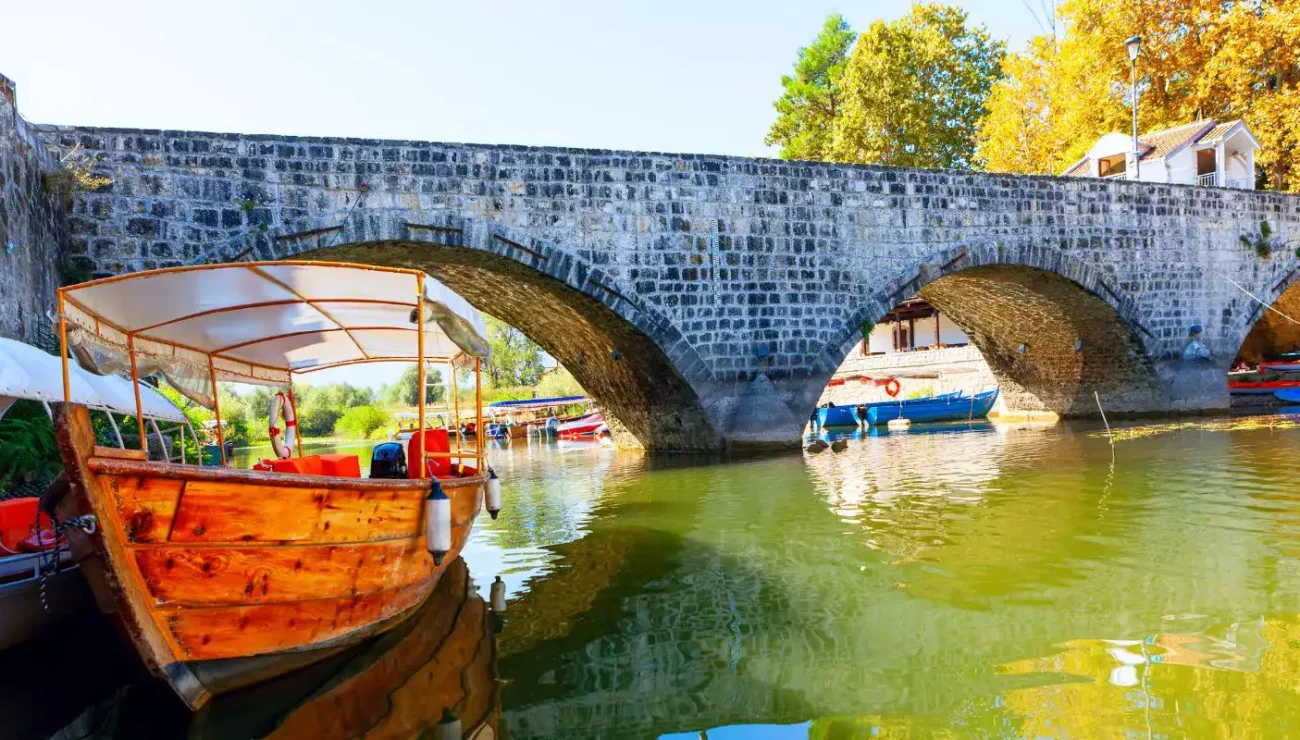
Montenegro · Rijeka Crnojevića · Old Bridge
Rijeka Crnojevića
Old Bridge Guide
A practical and atmospheric guide to the old stone bridge of Rijeka Crnojevića — when to visit, where to stand for the best photos, how it fits into the village, and how to combine it with the river, Pavlova Strana and Lake Skadar.
An Overview
The quiet landmark that gives the village its shape.
The old bridge is not a grand monument in the usual sense. Its power comes from proportion, reflection and setting: stone, water, boats, houses and the slow bend of the Crnojević River.
The old stone bridge of Rijeka Crnojevića is the place where most visits begin. It is the image that appears in travel guides, the frame people recognise from photographs, and the point where the village gathers itself around the river. But it is also easy to underestimate. Arrive too quickly, take one photo, leave after five minutes, and the bridge can feel like a small stop. Give it time, and it becomes the key to understanding the whole village.
From the bridge, you can read the landscape at once: the quiet quay, the riverside restaurants, the boats waiting for Lake Skadar tours, the narrow road climbing toward Pavlova Strana, and the water bending away from the village. It is not just a photo spot. It is the hinge between the human scale of Rijeka Crnojevića and the larger lake world beyond it.
This guide explains how to visit the bridge well: where to stand, when the light is best, how to photograph it, what to combine it with, and why the simplest landmark in the village often becomes the most memorable one.
I. The Bridge
How to experience the old bridge properly.
01 · First View
Start from the Quayside
The best first view of the bridge is not from the bridge itself, but from the village quay. From here, the arch sits naturally in the frame, with the river in front, the houses behind and the boats moored along the water. It gives you the bridge as part of the village, not as an isolated monument.
Take a few minutes here before crossing. Watch how the bridge changes with the movement of the water. If a boat has just passed, wait. When the river settles, the reflection becomes cleaner and the whole scene feels more balanced.
Best angle: step back from the water enough to include the full arch, the reflection and a little of the village edge.
02 · On the Bridge
Cross Slowly, Then Look Back
Crossing the bridge takes only a few seconds, but it is worth slowing down. From the centre, you get a direct view along the river and back toward the village. The height is modest, yet the perspective is enough to connect the quay, the restaurants and the water routes into one scene.
Once you reach the other side, turn around. This reverse view is often better than the first crossing, especially if the village is behind the bridge and the water is calm. It also helps you understand how compact Rijeka Crnojevića really is.
Good to know: the bridge is part of everyday village life, so stay aware of people, cars and local movement around it.
03 · Reflections
Wait for Still Water
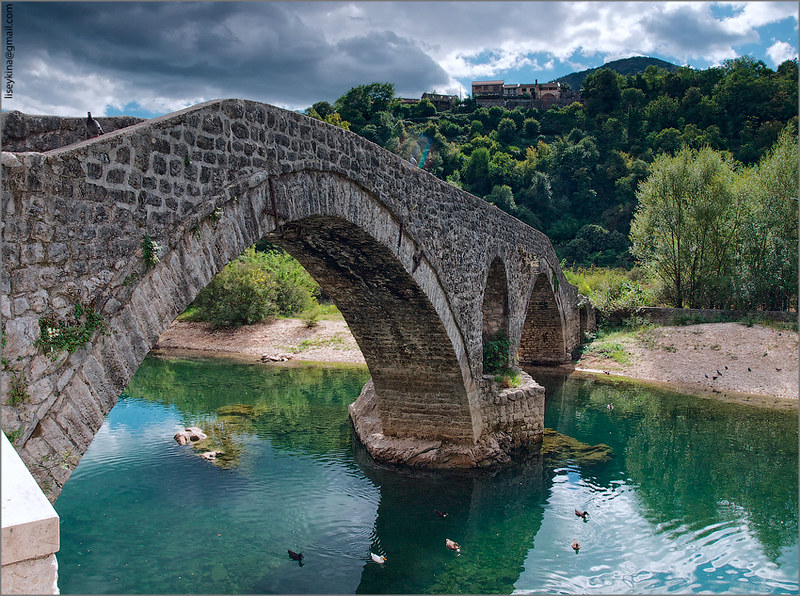
The bridge is most beautiful when the river is still enough to hold a reflection. This is why patience matters. The scene can look ordinary one minute and quietly perfect the next, especially when the arch appears twice: once in stone, once in water.
Early morning can be calm, but late afternoon often gives the better combination of light and atmosphere. The stone loses its midday glare, the river becomes darker, and the houses around the quay begin to feel more textured.
Photo tip: do not zoom too much. Include enough water below the bridge to give the reflection room.
04 · Context
Understand Its Place in the Village
The bridge works because everything around it is small. The village does not compete with it. The quay, houses, restaurants, boats and river all seem to lean toward the same centre. This is what makes Rijeka Crnojevića feel coherent even if you only spend a short time there.
After seeing the bridge, walk the quay rather than leaving immediately. The boats, terraces and river bend complete the picture. Without them, the bridge is only a landmark; with them, it becomes part of a living lakeside scene.
Best pairing: bridge first, quayside walk second, riverside lunch third.
05 · Timing
Choose the Right Light
The bridge is visible at any time of day, but not equally beautiful. Midday light can flatten the stone and make the water glare. Late afternoon usually gives the most flattering view, especially if you want warm tones, softer contrast and better reflection.
If you are planning a wider day around Lake Skadar, visit Pavlova Strana before or after the bridge depending on light. In summer, the strongest sequence is often lunch in the village, bridge photos after the heat drops, then the viewpoint as the afternoon turns golden.
Best time: late afternoon for photography, late morning for a calm walk before lunch.
06 · Next Step
Continue Toward the Water
The bridge is the beginning of the experience, not the end. From here, the natural next step is either a boat tour along the Crnojević River, a slow lunch beside the water, or the drive up toward Pavlova Strana for the larger view of the landscape.
If you only visit the bridge, you will see the village. If you add the river and the viewpoint, you will understand why this small place belongs naturally to the wider Lake Skadar route.
Best next move: take a short walk, then choose between lunch, boat tour or viewpoint.
Featured · Best Moment
The bridge is best
when the river goes still.
The old bridge does not need dramatic weather or a perfect sunset to work. Its best moment is quieter: a calm surface, a full reflection, a boat tied without movement, and the village settling into the water around it.
That is why the bridge rewards patience more than speed. Many visitors arrive, take a photograph, and leave before the scene has had time to arrange itself. Wait a few minutes. Let a boat pass. Let the ripples fade. The bridge often becomes more beautiful after you stop trying to capture it immediately.
This is the kind of place where the difference between a rushed stop and a memorable visit can be ten extra minutes.
II. By the Hour
Plan the bridge around your timing.
i.
10 minutes
Look from the quay, cross the bridge, turn around and take one wide photo with the reflection.
Best if you are only passing through.
ii.
30 minutes
Add the quay, both banks of the river and time to wait for still water before photographing the arch.
Best for photographers on a tight schedule.
iii.
One hour
Combine the bridge with the quayside, coffee or a short drink stop, and a slow look at the boats.
Best for a gentle village stop.
iv.
Half a day
Use the bridge as the start of a full Rijeka Crnojevića visit with lunch, boat tour or Pavlova Strana.
Best for seeing the bridge in context.
Plan It Well
What most visitors get wrong.
The most common mistake is treating the bridge as a standalone attraction. It is beautiful, but its real value comes from the way it anchors the whole village. If you only photograph the arch and leave, you miss the small sequence that makes Rijeka Crnojevića work: quay, bridge, river, restaurant, boat, viewpoint.
The second mistake is arriving when the light is too harsh and deciding the place is less special than the photos suggested. The bridge is subtle. It does not shout. It depends on atmosphere, reflection and scale. Visit when the water is calm and the light is softer, and the same scene becomes far more memorable.
- Do not rush the photo — wait for the water to settle.
- Do not photograph only from the bridge — the best view is often from the quay.
- Do not skip the village walk — the bridge makes more sense with its surroundings.
- Do not visit only at midday if photography matters to you.
III. Best For
Who will enjoy the bridge most?
Photographers
The bridge offers a compact composition with stone, river, village and reflection, especially strong in soft light.
Slow travellers
It rewards people who like still places, quiet details and the feeling of a small village organised around water.
First-time visitors
The bridge is the easiest starting point for understanding Rijeka Crnojevića before choosing lunch, boat or viewpoint.
Beyond the Bridge
What to do afterwards.
The bridge is the natural starting point, but it should not be the whole visit. Once you have seen it from both banks, decide what kind of Rijeka Crnojevića experience you want: food, water, viewpoint or a slower walk through the village.
For most travellers, the best next step is simple: walk the quay, sit down by the river, and then continue either by boat or by road to Pavlova Strana. That sequence gives the bridge its proper place inside the wider Lake Skadar landscape.
- Take a boat tour — continue from the bridge onto the river
- Eat by the water — make lunch part of the visit
- Drive to Pavlova Strana — see the river from above
- Follow a day trip itinerary — connect the bridge, river and viewpoint
FAQ
Frequently asked questions.
Is the old bridge in Rijeka Crnojevića worth visiting?
Yes. The old bridge is the defining landmark of Rijeka Crnojevića and the best place to begin a visit. It is not a large monument, but its setting over the river, beside the quay and close to the boat departures makes it one of the most atmospheric spots in the village.
How long do you need at the bridge?
Ten minutes is enough for a quick look and a photo, but thirty minutes is better if you want to see the bridge from both sides and wait for the water to calm. One hour allows you to combine the bridge with a quayside walk and a drink by the river.
Where is the best place to photograph the bridge?
The best angle is usually from the quayside rather than from the bridge itself. Step back far enough to include the full arch, the reflection and a little of the village around it. Late afternoon light is usually more flattering than harsh midday sun.
What is the best time of day to visit?
Late afternoon is the best time for photography because the light is softer and the water can hold a stronger reflection. Late morning is also pleasant if you want to combine the bridge with lunch. Midday in summer can be brighter and less atmospheric.
Can you combine the bridge with a boat tour?
Yes. The bridge is very close to the village quay, where small boat tours usually depart for the Crnojević River and Lake Skadar. A good half-day plan is to see the bridge, take a boat tour and return for lunch or a drink by the water.
Is the bridge easy to visit with children or older travellers?
Yes, the bridge and quayside are compact and easy to visit. The main thing to watch for is everyday local traffic and uneven surfaces around the village. For a gentle visit, stay close to the bridge, quay and riverside restaurants.
What should I do after seeing the bridge?
After the bridge, walk along the quay, stop for lunch or coffee, take a boat tour on the Crnojević River, or drive up to Pavlova Strana viewpoint. The bridge works best as the starting point for a wider Rijeka Crnojevića visit.
Is the bridge the same as Pavlova Strana viewpoint?
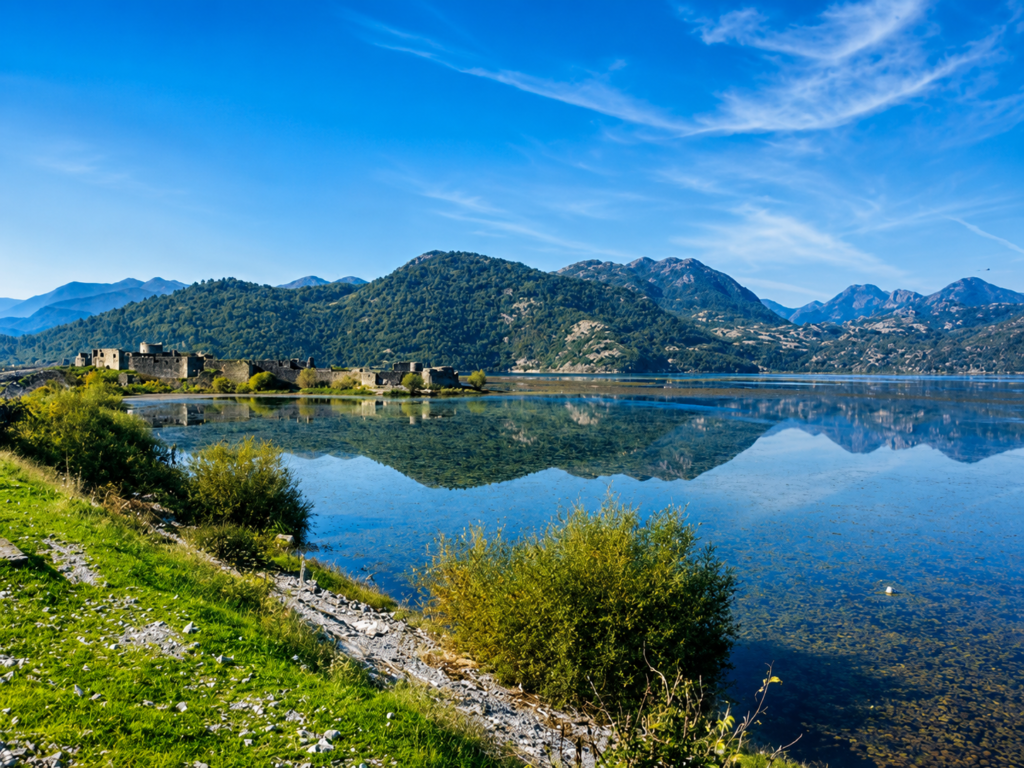
No. The old bridge is in the village centre, crossing the river at water level. Pavlova Strana is a viewpoint above the village, reached by road, with a wide view over the river bend and Lake Skadar landscape. They are best visited together.
Plan Your Visit
Use the bridge as your starting point.
The best Rijeka Crnojevića visit begins at the bridge, then opens outward: a quayside walk, a slow lunch, a boat tour or the climb to Pavlova Strana.